How to Draw a Mandala: Learn How to Draw Mandalas for Spiritual Enrichment and Creative Enjoyment
Table Of Content
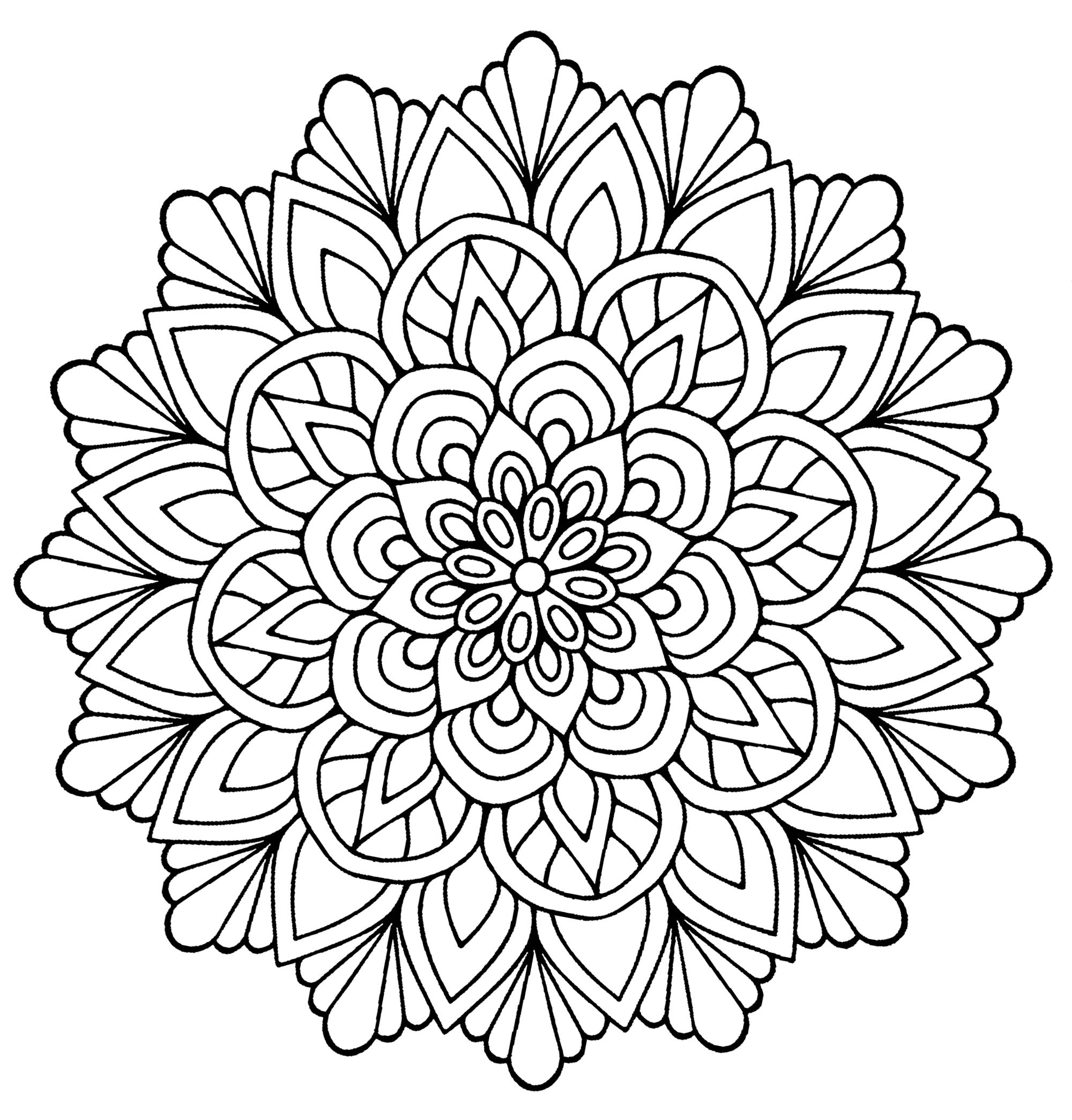
When an individual looks at the symbol for a long time, they experience a kind of inner transformation. When they concentrate upon the intricate designs and rich colors, the mind forgets the material world and ventures on a spiritual journey. Creating a mandala allows you to explore many different colors, patterns, and shapes. The process is very therapeutic, and once you start, you will become hooked. Drawing and coloring a mandala is a great way of relieving stress and allows you to unwind.
The MARI tool
Of course, you can create such a design by yourself as it’s described in the article. But if you don’t want to waste your time on creating, download some great ones made especially by designers who can make them professionally. For Hindus, a mandala tattoo represents the spirit and being. Just like in other nations, geometric figures mean the basic principles of the universe.
Creating a non circular Mandala
What Is a Mandala? (No, Not Nelson. That's Mandela) - People HowStuffWorks
What Is a Mandala? (No, Not Nelson. That's Mandela).
Posted: Mon, 18 Nov 2019 08:00:00 GMT [source]
Researchers have deduced that the division of this book is based on the structure of the Mandala. As one delves deeper and deeper into the text, it’s like a transition from the periphery circles of the Mandala to the innermost one, and enlightenment is attained as the book progresses. Since joining the content writing world, she has gained a lot of experience over the years writing on a diverse selection of topics, from beauty, health, wellness, travel, and more.
Free & Easy Animal Sketch Drawing Information & Ideas
In Hinduism, Mandala symbols were used to reflect on the purpose of life and existence. They were also used as a channel to connect to the divine entity. A type of Mandala, known as the Yantra, was particularly popular in Hinduism and aided in the practice of deep meditation.

The Buddhists use their mandalas for meditation purposes and make an imaginary palace, allowing them to focus during their meditation, and each object has a significant meaning. However, the true meaning of a mandala depends on the individual, the creation or observation of that image that centers around the awareness of your place or purpose in the world through meditation. Drawing mandalas is a wonderful way to release yourself from "the monkey mind" and move away from your to-do lists, schedules, worries, and fears for a bit. The idea is to zone out and let yourself enter a creative flow state. So turn on your favorite relaxing music, light some candles, take a few deep breaths, and let your subconscious mind take over as you draw your mandala masterpiece. She puts her heart and mind into whatever she pursues and craves for creative ventures.
Revealing radiance: Wendy Newman's mandala designs are one-of-a-kind - News-Press
Revealing radiance: Wendy Newman's mandala designs are one-of-a-kind.
Posted: Sat, 03 Feb 2018 08:00:00 GMT [source]
Start in the centre and work around and then outwards until you fill the mandala with different layers of shapes. It is great fun as you watch the mandala emerge before your own eyes. You will find your own style, and this will develop with each new mandala that you draw. I chose to use two different colors of colored pencil to draw in my design. In the example below, you can see 2 instances in the outermost circle where I made a mistake the first time around. If this is your first time learning how to draw a mandala, trust me - it will be even easier the next time you do it.
Dani Rhys has worked as a writer and editor for over 15 years. She holds a Masters degree in Linguistics and Education, and has also studied Political Science, Ancient History and Literature. She has a wide range of interests ranging from ancient cultures and mythology to Harry Potter and gardening. She works as the chief editor of Symbol Sage but also takes the time to write on topics that interest her.
Elephant Head Colored Vector Image
Initially, the yantra was used to encode the sacred knowledge of the cosmic laws of the universe and represented aspects of energy found in planets, deities, and chakras. In Buddhism, the mandala represents the universe and emphasizes the potential of enlightenment. The mandala can be made on a wall like a scroll painting, or just an ordinary painting, and can also be made on any table using some colored sand. The pictures shown in the mandala illustrate any obstacles that need to be overcome to be able to cultivate wisdom and compassion. This might be a question asked in more Western cultures, where a mandala is not as common. On the other hand, Asian art portrays the mandala in detail because it is more prevalent in these cultures.
This whole exercise exemplifies the Buddhist belief that nothing in this world is permanent. Some mandalas in Vajrayana Buddhism are also developed into sand painting. They are parts of various tantra meditation practices as well. They represent the teachings of the religion, as well as the nature of the pure and enlightened mind.
“The mind is relaxed by this kind of repetitious activity that doesn't require analysis or deciphering,” she adds. If you’re feeling stressed out and need a relaxing activity, coloring a mandala can be an easy way to calm the mind and act as a type of meditation. “A person may also simply print out a mandala and color it as a way to relax, focus attention on the present moment, or just allow the mind to settle after a long day of work,” says Emanuelli. Whether you hang up a print of a mandala or spend time mindfully drawing one, they can be a great addition to your self-care practice.
By concentrating on the individual shapes you can make it much easier. In the step by step guide below I will take you through the whole process. The Charvakan mandala reflects this as an image of the four elements each enclosed in a circle within a broader circle. The Rig Veda is comprised of ten books, known as mandalas, containing 1,028 hymns of 10,600 verses relating to religious understanding and practice. The image has been used by cultures around the world in many different periods up to the present.
The purpose of the mandala in such practices is to help transform an ordinary mind into an enlightened one. Certain mandalas in Buddhism also contain deities in their center, and they represent the philosophical views of the religion. In Buddhism, a Mandala is a visual representation of the universe.
This cute mandala is a colorful option for those of you who love to use bright colors. Well, if you are looking for something elegant and delicate, then this mandala design idea is no doubt the way to go for you. A huge collection of simple mandala flowers that will no doubt back you up in various situations.
The seed is the gathering centre wherein the outside energies are drawn into. During the act of drawing the energies, the artist unfolds his/her own energies. The centre of the Mandala is considered as the essence and the circumference is known as grasping.
Carl Jung, a Swiss psychologist, believes that mandalas are representations of our minds, as they enable us to concentrate and transform unconscious things in our minds. Many different branches of psychology see the benefits of mandalas in different ways. The objects can represent any aspect of their Buddhist wisdom, or else remind them of anything concerning guiding principles. The mandala’s sole purpose is to transform their ordinary mind into one that is enlightened and to assist in healing their minds. Many of the Buddhist mandalas contain certain deities right in the center, which represent the views of their religion and serve as role models. A mandala can be described as a circle or geometric design, that is controlled, or enclosed within a square, and arranged in sections that are structured around one central point.


Comments
Post a Comment